
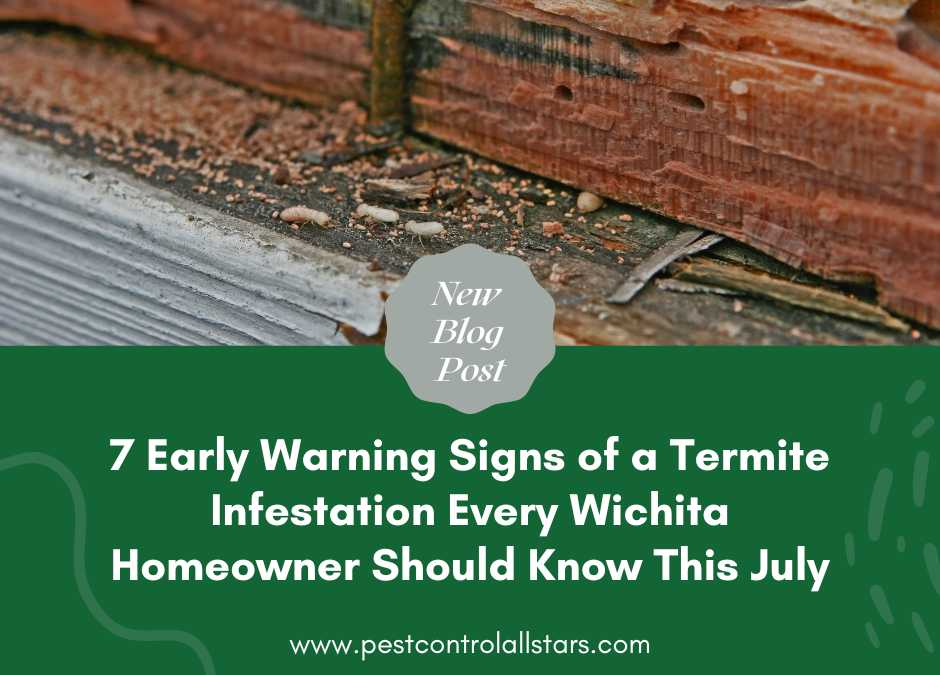
July is one of the busiest months for termite activity in Kansas. Warm temperatures, increased humidity, and summer rainstorms create ideal conditions for termites to remain active around homes and businesses. While many homeowners are focused on vacations, backyard barbecues, and lawn care, termites can quietly cause extensive damage behind walls, beneath floors, and inside wooden structures.
One of the biggest challenges with termites is that they often go unnoticed until significant damage has already occurred. Unlike many other pests, termites rarely make themselves visible. Instead, they spend most of their lives hidden inside wood or underground, feeding on cellulose and slowly weakening the structural integrity of a home.
The good news is that termites usually leave clues before major damage occurs. Recognizing these early warning signs can help you address a problem before repairs become expensive.
Here are seven signs every Wichita homeowner should watch for this summer.
1. Mud Tubes Along Your Foundation
One of the clearest indicators of subterranean termites is the presence of mud tubes.
These pencil-sized tunnels are built from soil, saliva, and tiny bits of wood. They allow termites to travel safely between their underground colony and the wood they are feeding on while staying protected from heat, sunlight, and predators.
Mud tubes are commonly found:
- Along foundations
- Crawl spaces
- Basement walls
- Garage slabs
- Porch supports
- Exterior brick or concrete
During July, recent rainfall combined with warm temperatures often makes these tubes easier to spot because they remain moist and intact.
If you discover mud tubes, avoid knocking them down immediately. Even if they appear inactive, they should be inspected to determine whether termites are still using them.
2. Hollow-Sounding Wood
Wood may look perfectly healthy on the outside while being extensively damaged inside.
As termites consume wood from the inside outward, only a thin surface layer often remains. When tapped, the wood may sound hollow or papery instead of solid.
Check areas such as:
- Door frames
- Window frames
- Porch posts
- Deck supports
- Baseboards
- Garage framing
- Wooden fences
Many homeowners notice this while hanging decorations, repairing trim, or completing summer maintenance projects.
The sooner hollow wood is discovered, the more likely the damage can be limited.
3. Blistering or Bubbling Paint
Termite activity can sometimes resemble water damage.
As termites tunnel beneath painted surfaces, moisture becomes trapped inside the wood. This causes paint to bubble, blister, or peel even when there isn’t a plumbing leak nearby.
Because Kansas experiences periods of high humidity during July, homeowners often assume these bubbles are simply weather-related.
However, if bubbling paint appears alongside other termite warning signs, it’s worth having the area professionally evaluated.
Pay close attention to:
- Exterior trim
- Window sills
- Garage doors
- Baseboards
- Interior walls connected to exterior framing
4. Doors and Windows That Suddenly Stick
Has a door that always opened smoothly suddenly become difficult to close?
Termite damage can slightly warp wooden frames as the insects feed inside them. This subtle structural change may cause:
- Doors that stick
- Windows that become difficult to open
- Misaligned door frames
- Tight-fitting sliding doors
While humidity can also cause wood to swell during Kansas summers, persistent problems combined with other warning signs deserve closer inspection.
Many homeowners dismiss these changes as seasonal expansion when termites may actually be contributing to the issue.
5. Discarded Wings Around Your Home
One of the most recognizable signs of termite activity is finding small piles of discarded wings.
Reproductive termites, called swarmers, leave their colony to establish new ones. After finding a suitable location, they shed their wings.
You might find these wings:
- Near windows
- Around doors
- On porches
- Along window sills
- Inside garages
- Near outdoor lights
Although termite swarms are most common in spring, colonies can continue producing swarmers into the summer depending on weather conditions.
The wings are often mistaken for flying ant wings, so proper identification is important.
6. Tiny Holes or Damaged Wood
As termite galleries expand, damaged wood may begin to crack, splinter, or reveal small openings.
Common examples include:
- Soft deck boards
- Damaged fence posts
- Porch railings
- Wooden sheds
- Outdoor playsets
- Decorative trim
If you gently probe suspicious wood with a screwdriver and it breaks apart easily, hidden termite damage could be present.
Never assume outdoor wood deterioration is simply from age or weather exposure.
7. Frass or Other Unusual Debris
While subterranean termites don’t always leave noticeable frass, some termite species produce tiny wood-colored droppings that resemble sawdust or coarse pepper.
Homeowners sometimes mistake these piles for:
- Sawdust
- Dirt
- Sand
- Debris from carpenter ants
Any unexplained accumulation of wood-colored material near wooden structures deserves further investigation.
Likewise, wood that appears unusually cracked or layered may indicate termites feeding beneath the surface.
Why July Is Prime Time for Termites in Wichita
Kansas summers provide nearly ideal conditions for termite activity.
During July, homeowners often experience:
- Extended periods of warm weather
- Afternoon thunderstorms
- Increased soil moisture
- Higher humidity
- Heavy irrigation around foundations
These conditions help subterranean termites remain active while encouraging colonies to expand their feeding areas.
Many termite infestations discovered in late summer actually began months—or even years—earlier.
That’s why regular inspections during the summer are so valuable.
Areas Around Your Home That Deserve Extra Attention
When performing a visual inspection, focus on locations where termites are most likely to enter.
Check around:
Foundation Walls
Look carefully for mud tubes climbing concrete or brick.
Wooden Decks
Support posts and joists are frequent targets.
Porch Columns
Wood that stays damp after rain can become especially attractive.
Crawl Spaces
Dark, humid environments provide excellent termite conditions.
Firewood Piles
Avoid stacking firewood directly against your home.
Mulch Beds
Excess mulch placed against siding can trap moisture and provide easy termite access.
Wooden Fences
Fence posts touching soil can serve as pathways toward your home.
How to Help Prevent Termites
Although no homeowner can eliminate every risk, several maintenance habits can make your property less attractive to termites.
Reduce Excess Moisture
Repair leaking faucets, irrigation systems, and outdoor plumbing.
Keep Gutters Flowing Properly
Direct water away from your home’s foundation.
Limit Wood-to-Soil Contact
Avoid allowing siding, deck boards, or wooden supports to remain in direct contact with soil whenever possible.
Store Firewood Away From the House
Keep stacks elevated and several feet from exterior walls.
Trim Landscaping
Dense vegetation can hide termite activity and trap moisture.
Monitor Wooden Structures
Inspect fences, sheds, pergolas, decks, and playsets throughout the summer.
Why Early Detection Matters
Termites don’t stop feeding when summer ends.
A colony can remain active year-round beneath the soil, quietly expanding while causing damage that’s hidden from view.
The earlier termite activity is identified:
- Less structural damage may occur.
- Repairs are often less extensive.
- Treatment can be more targeted.
- Future infestations may be easier to prevent.
Waiting until obvious structural problems appear often means termites have been active for a long time.
Enjoy Summer Without Worrying About Hidden Damage
July is a wonderful time to enjoy your yard, spend time with family, and tackle outdoor projects—but it’s also one of the most important months to stay alert for termite activity.
By recognizing the early warning signs—such as mud tubes, hollow wood, bubbling paint, sticking doors, discarded wings, damaged wood, and unusual debris—you can catch potential problems before they become major repairs.
A few minutes spent inspecting your home this summer can go a long way toward protecting one of your biggest investments.
Whether your home is newer or has been standing for decades, staying proactive about termite prevention helps ensure it remains safe, strong, and protected for years to come.